

Showing posts with label France. Show all posts
Showing posts with label France. Show all posts
Sunday, October 25, 2009
Mont Saint-Michel
Mont Saint-Michel and its abbey at night. This UNESCO World Heritage Site is a rocky tidal island roughly one kilometre from the north coast of Normandy, France at the mouth of the Couesnon River, near Avranches. Mont Saint-Michel was previously connected to the mainland via a thin natural land bridge, which before modernization was covered at high tide and revealed at low tide.


Monday, September 28, 2009
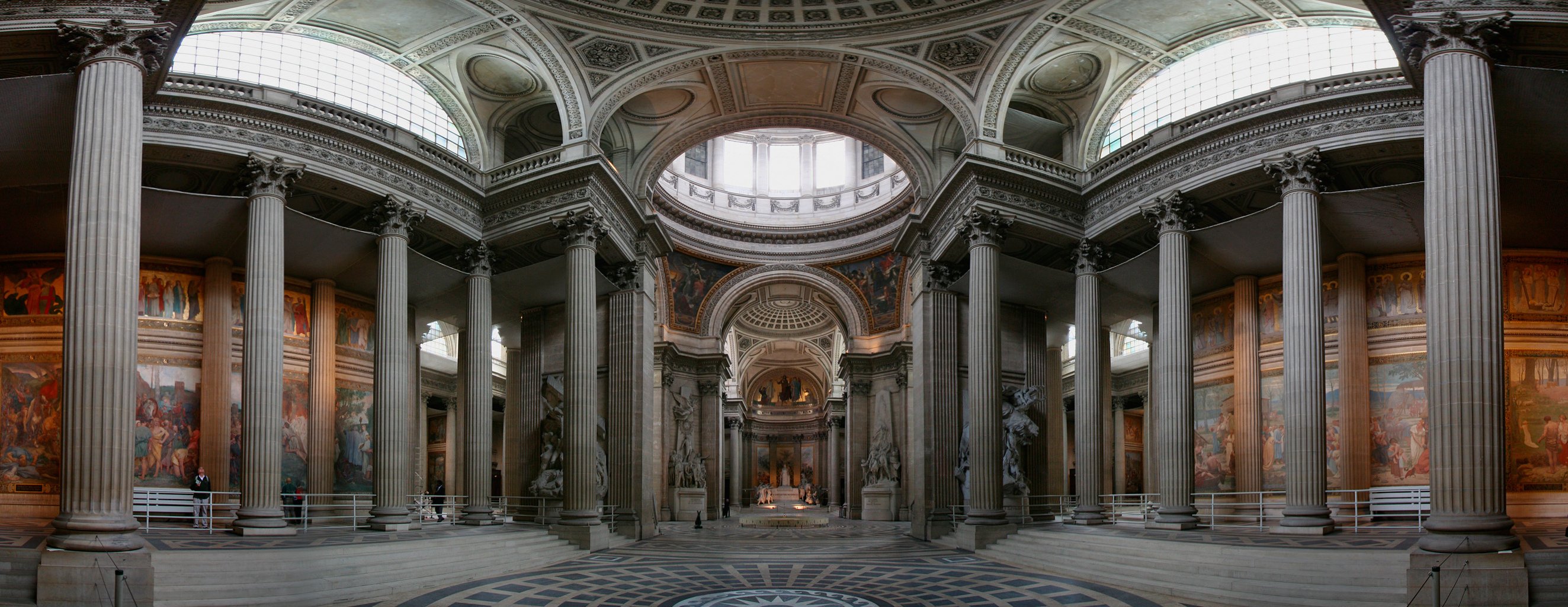
Interior of the Panthéon, Paris
Panoramic shot of the interior of the Panthéon, a church and burial place located in the Latin Quarter of Paris, France. Originally built as a church dedicated to St. Genevieve, the National Convention ordered it to be changed from a church to a mausoleum for the interment of great Frenchmen. Among those buried in its necropolis are Voltaire, Rousseau, Marat, Victor Hugo, Émile Zola, Jean Moulin, Marie Curie, and Louis Braille.

Chapel, Palace of Versailles
The chapel of the Palace of Versailles, one of the palace's grandest interiors. Located in Versailles, France, Versailles is famous not only as a building, but as a symbol of the system of absolute monarchy which Louis XIV espoused. Originally the royal hunting lodge when he decided to move there in 1660, the building was expanded over the next few decades to become the largest palace in Europe. Louis XIV officially moved in 1682 and the Court of Versailles was the centre of power in Ancien Régime France until the royal family was forced to return to the capital in 1789.


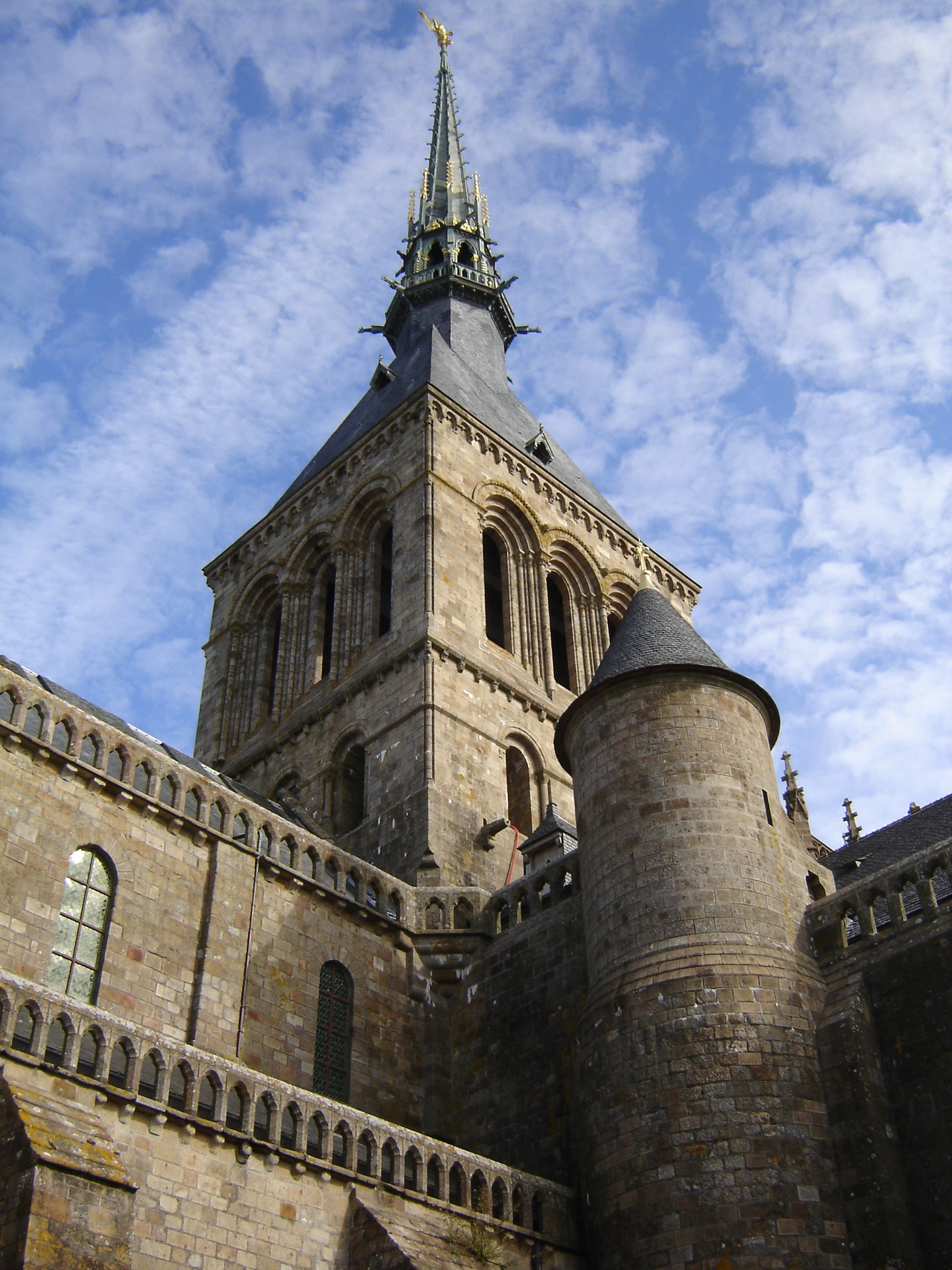
Abbey spire, Mont Saint Michel, France
Mont Saint Michel, a small rocky tidal island in Normandy, is famous for its Benedictine abbey (spire pictured here) and steepled church (built between the 11th and 16th centuries) which occupy most of the island. The abbey was constructed in the 11th century, but by the time of the French Revolution its popularity had waned to the point where there were scarcely any monks in residence and it was converted to a prison. However, in 1874 it was declared a national monument and is on the list of UNESCO World Heritage Sites.

Château de Chambord, France
With its very distinct Renaissance architecture, the Château de Chambord in Chambord, Loir-et-Cher, France, is one of the most recognizable châteaux in the world. The massive castle, originally built as a hunting lodge for King François I, features 440 rooms, 365 fireplaces, and 84 staircases. The château was never intended to provide any form of defence from imagined enemies. As such, the walls, towers and partial moat are purely decorative.


Fortified city of Carcassonne, France
Fortified city of Carcassonne, France, and the Pont Vieux crossing the Aude river
Panorama of the fortified city of Carcassonne (Aude, France) and the Pont Vieux crossing the Aude River. The fortress of Carcassonne was considered impregnable and never conquered. It was begun by the Romans and built up through the years. It fell into disrepair was restored in the 19th century. It is now a UNESCO World Heritage Site.

Panorama of the fortified city of Carcassonne (Aude, France) and the Pont Vieux crossing the Aude River. The fortress of Carcassonne was considered impregnable and never conquered. It was begun by the Romans and built up through the years. It fell into disrepair was restored in the 19th century. It is now a UNESCO World Heritage Site.

Sunday, September 27, 2009
The Eiffel Tower
The Eiffel Tower in Paris is one of the world's most recognisable buildings and a symbol of France. The 300 m (986 ft) high tower was designed by Gustave Eiffel as a gateway to the Exposition Universelle of 1889. It was the world's tallest structure for forty years. Eiffel used his experience in building railway bridges when designing the tower, prefabricating the 18,038 wrought iron pieces off site then assembling the pieces with the help of 300 workers.
Click on the thumbnail and download high resolution pic of about 2.5 MB, where you could see the birds flying in a distant sky also.

Click on the thumbnail and download high resolution pic of about 2.5 MB, where you could see the birds flying in a distant sky also.

Subscribe to:
Posts (Atom)